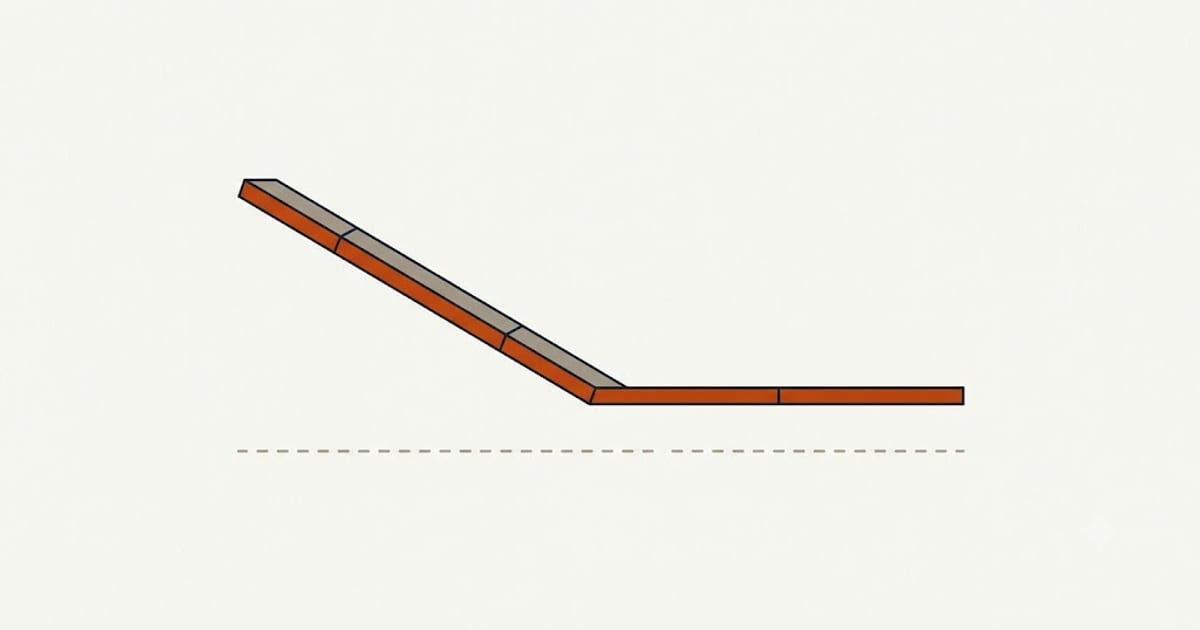
Drying curves flatten near the end — that is normal, as easy surface water gives way to slower bound water. A stall is different: readings that stop improving while still well above the dry standard, two or three days in a row.
There are six usual causes. Only one of them is fixed by adding air movers, which is why the reflex to add fans so often makes things worse.
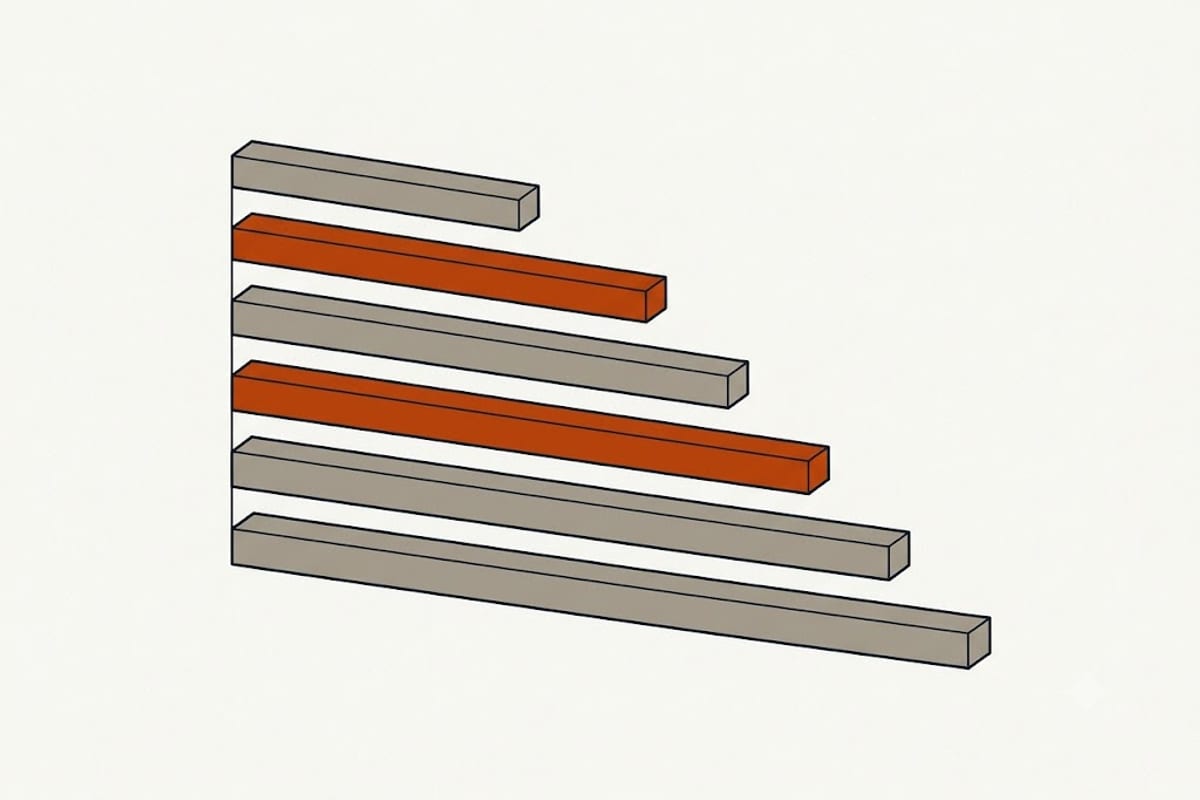
1. Hidden wet material — most common by a wide margin
The meter is reading a surface that is being rewetted from behind. Wet insulation in a cavity, water trapped under a tile bed, a soaked sill plate, moisture in the subfloor under a floating floor.
Find it with a moisture map: read a grid across the whole area, not just where the water was seen, and mark where readings stop falling. Thermal imaging finds the boundary quickly — evaporating surfaces read cooler — though it shows temperature, not moisture, so every hit needs confirming with a meter.
Adding airflow does nothing here. The water has no path to the moving air.
2. Not enough dehumidification
Air movers evaporate water into the room. If capacity cannot remove it, humidity rises, the vapor pressure gradient shrinks, and evaporation slows toward nothing.
The tell is in the air readings: relative humidity in the affected room holding steady or climbing while equipment runs. Check GPP against an unaffected room — if the gap is not narrowing, capacity is short.
3. Too cold
Below about 70°F, evaporation slows sharply and refrigerant dehumidifiers lose a large share of their output. Unheated basements and garages in winter stall for this reason alone, with everything else set up correctly.
The fix is heat, to bring the space into the 70 to 90°F working window. It is the one situation where a stalled job improves within hours of the right change.
4. The building is being ventilated against you
An open window, a running bathroom exhaust fan, or an HVAC system pulling humid air into the affected zone will undo a dehumidifier's work continuously.
Outdoor air only helps when its dew point is well below indoor dew point. On a mild humid day it is not, however dry it feels. Close the space and let the equipment control it.
5. Airflow is going nowhere useful
The one cause that does respond to fans — but to aiming them, not buying more. Units set head-on into walls, or facing each other, or all pointed at the middle of the room, move a lot of air across nothing wet.
Set a single continuous circulation around the perimeter, every unit turning the same direction, at a shallow 15 to 45 degree angle to the surfaces.
6. The material simply takes this long
Hardwood, plaster, lightweight concrete, and masonry hold bound water and release it slowly. A hardwood floor at day four that has barely moved is not necessarily stalled — it may be behaving exactly as it should, and the answer is specialty drying plus patience rather than intervention.
The distinguishing question is whether the rate is slow or zero. Bound water moves slowly but it moves. A reading identical for three days is a stall, whatever the material.
Work them in order
- Read the air first — temperature, RH, and GPP inside versus outside versus an unaffected room. That separates causes 2, 3, and 4 in five minutes.
- Walk the airflow pattern. Cause 5 is visible from the doorway.
- Moisture map the whole area, not just the known wet zone. That is cause 1.
- Only then consider that the material is behaving normally.
Adding equipment before working through this list is how mitigation invoices grow without the readings improving — and equipment days are exactly what an insurer scrutinizes hardest.