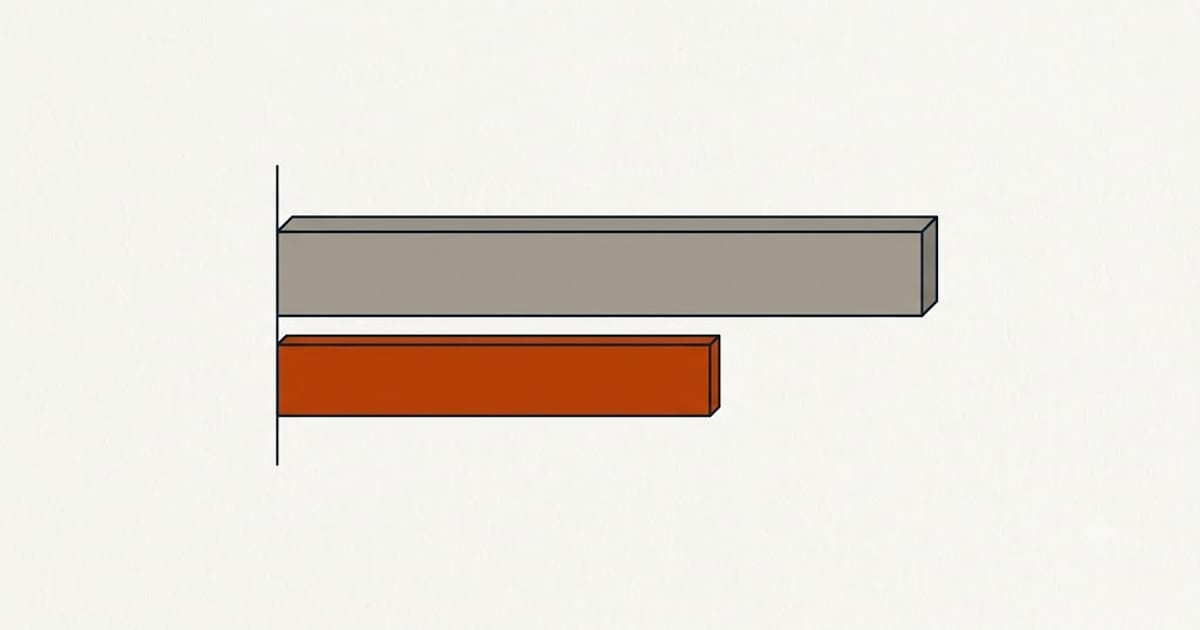
A basement of the same square footage as a room upstairs, wet to the same degree, routinely takes twice as long. Four conditions cause that, and three of them can be changed.

1. Temperature — the one that matters most
Basements sit at ground temperature, commonly 55 to 65°F, and in winter lower. Evaporation slows steeply as temperature drops, and refrigerant dehumidifiers lose a large fraction of their output below about 70°F.
This single factor accounts for most of the difference. Heating the space into the 70 to 90°F working window is usually the highest-value action available, and it shows results within hours rather than days.
2. Concrete and masonry hold water
Concrete is porous and holds a great deal of water in its capillary structure. Block walls are worse — the cores are open and water sits in them. Both are Class 4 materials: bound water, released slowly, unresponsive to airflow.
A slab that was under water needs low humidity held over time rather than fans. Expect it to be the last thing to reach target.
3. No natural ventilation
Upstairs rooms exchange air with the rest of the house and with outside. A basement is a closed box, often with the humidity from the rest of the house draining down into it. Without equipment, moisture that evaporates has nowhere to go and simply redistributes.
4. Everything is finished with the wrong materials
Basement finishing tends to use exactly the materials that hold water: carpet with pad over slab, drywall to the floor, batt insulation in stud walls sitting against concrete, and frequently a poly vapor barrier that traps water on the wrong side.
Realistic timelines
| Situation | Time |
|---|---|
| Unfinished, clean water on sealed slab, heated | 2–3 days |
| Unfinished, cold, block walls wet | 5–7 days |
| Finished, carpet and pad, clean water, heated | 4–6 days |
| Finished, drywall and insulation wet | 6–10 days, usually with removal |
| Any groundwater or sewer backup | Removal, then 5–7 days |
What to do first, in order
- Heat the space. Nothing else works well until this is done.
- Extract, then pull the pad. Carpet pad over a slab holds water against concrete and is inexpensive. It nearly always comes out.
- Pull the baseboard and check the bottom plate. Water at a basement wall means water in the cavity, and the plate sits directly on concrete.
- Check for a vapor barrier. Poly between insulation and drywall on a basement wall traps water and the assembly cannot dry. It must be opened.
- Close the space and dehumidify. Not windows — outdoor dew point is above basement dew point most of the year.
The source question that has to be answered
Interior losses dry and stay dry. Groundwater does not — it comes back with the next heavy rain, and drying it without addressing why it entered means doing this again.
If the water came in at the wall-floor joint, through a crack, or up through the slab, the drying job is only half of it. The other half is grading, gutters, downspout extensions, and drainage — and none of that is a restoration contractor's work.
The mistake that defines basement jobs
Running four air movers in a 58°F basement for a week and concluding the job is difficult. It is not difficult; it is cold. Add heat, and the same equipment finishes the work in a few days.
Reading the readings in a cold space
Moisture meters do not compensate for temperature, and concrete gives unusual readings on almost every instrument. Two habits keep basement measurements honest.
First, take the dry standard from concrete in the same basement that never got wet, not from an upstairs floor. Concrete in a basement is never as dry as material upstairs, and comparing across floors produces a target that will never be met no matter how long the equipment runs.
Second, treat pinless readings on masonry as relative rather than absolute. The number is affected by density, by aggregate, and by what is behind the sensor. What matters is whether the same spot reads lower today than yesterday, which is the only question the instrument answers reliably on that material.
When the job is finished but the basement still smells
A basement that has reached its dry standard and still smells musty usually has one of two things left: colonized material in a cavity that was never opened, or a source of ongoing moisture that has nothing to do with the original loss.
The second is more common than people expect. A basement running at 65% relative humidity all summer will smell regardless of how well the flood was dried, because that humidity is enough to support growth on dust and on the paper face of drywall. That is a permanent dehumidifier, not a restoration problem, and confusing the two leads to repeat visits that never resolve anything.