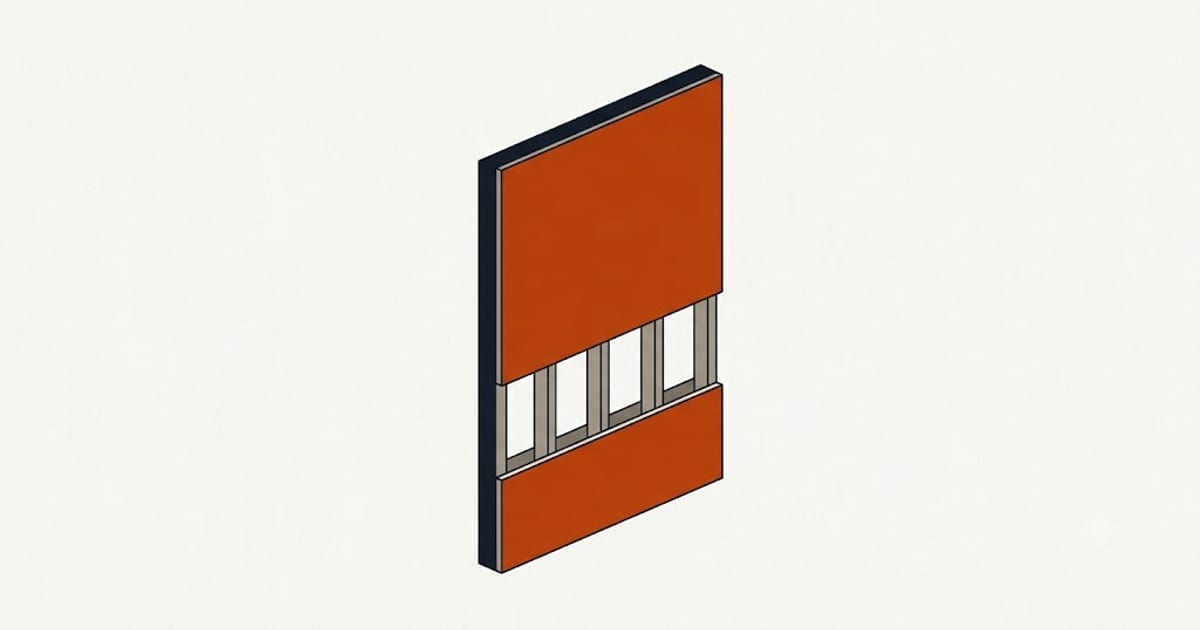
Drywall itself is fairly forgiving. Wet with clean water, dried quickly, it usually recovers — the paper faces can wrinkle and the surface may need refinishing, but the board is rarely the reason it comes out.
What is behind it is the reason. A flood cut is really a decision about the cavity.
When drying in place normally works
All of these together:
- Category 1 water — clean supply water, not grey or black
- Under 48 hours since it got wet
- No insulation in that wall, or fibreglass that can dry
- The cavity can be opened to airflow — trim off, holes drilled low, air pushed in
- Readings actually fall over the first two days
Interior partition walls with no insulation are the easy case. Air can be moved through the cavity and the whole assembly dries.
When it comes out
Category 2 or 3 water. Not a judgement call. Contaminated water in a porous material means the material goes. Drywall wicks upward, so the cut is made above the visible line — typically 12 or 24 inches, at a convenient height for the replacement board.
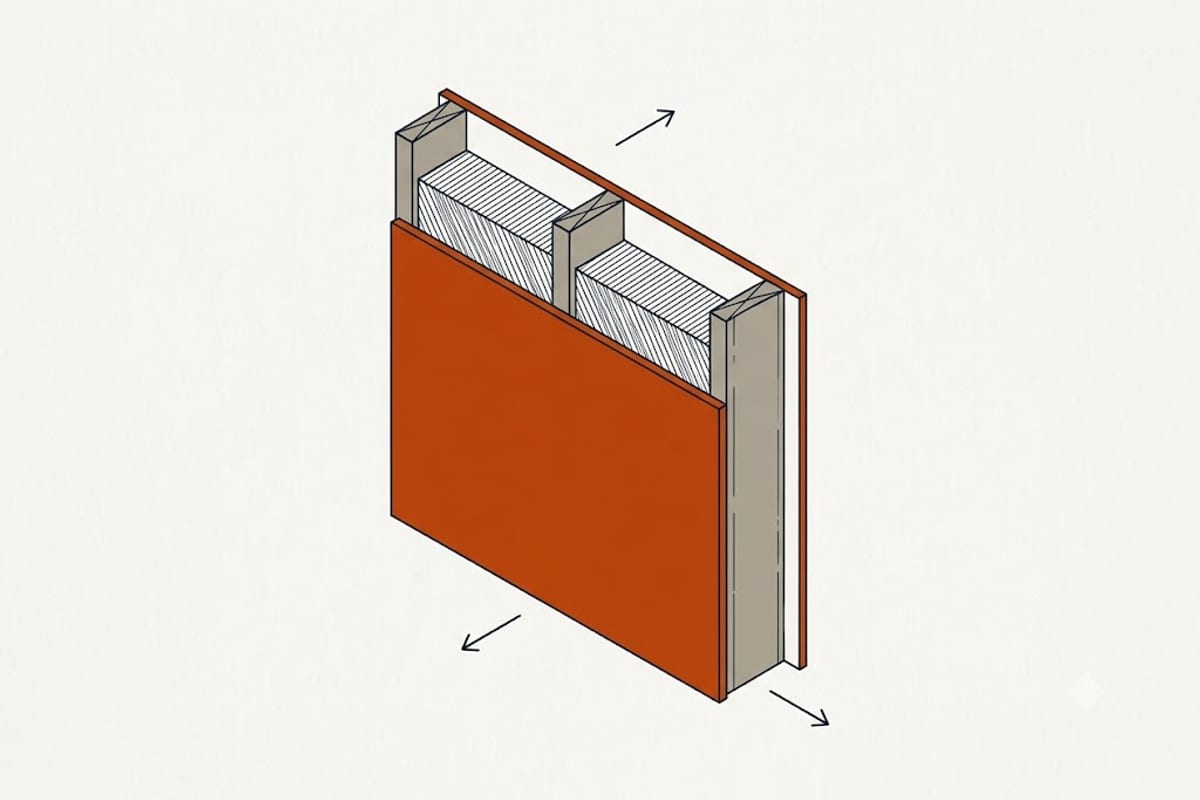
Insulation is wet. This is the common one, and it is what makes exterior walls different. Wet fibreglass loses its R-value and stays damp for weeks inside a closed cavity; wet cellulose slumps and does not recover. Getting the insulation out means opening the wall, and once it is open the drywall has already been cut.
It has been wet more than about 72 hours. Mould growth on the paper facing starts within 24 to 48 hours in warm conditions. Past that window you are no longer deciding whether it can dry, you are deciding whether to keep a material that has already begun to colonise.
It has lost strength. Drywall that is soft, sagging, or crumbles when pressed has failed structurally and will not come back.
How to check without cutting
A moisture meter — pin type into the board, or a pinless meter across the surface — compared against a dry wall elsewhere in the same room.
A borescope through a small hole at the base of the cavity. A hole the size of a coin behind the baseboard tells you whether the insulation is wet and whether water is standing on the bottom plate. That is a five-minute check that decides a several-thousand-dollar question, and it is worth insisting on before anyone cuts.
Remove the baseboard and look. Water sits on the bottom plate, and the base of the drywall is where wicking shows first.
The flood cut is not the expensive part
Cutting and replacing two feet of drywall on one wall is a modest job. What follows it is where the money goes: taping, sanding, priming, painting the whole wall or the whole room to avoid a visible patch, and replacing the baseboard.
That is worth knowing when comparing two estimates. One that quotes the cut and not the finishing is not cheaper — it is incomplete.
Where people get this wrong in both directions
Cutting when it was not needed. A Category 1 leak found the same day, on an uninsulated interior wall, dried properly, does not need demolition. Some contractors default to cutting because it is faster to price and quicker to close out than a monitored drying job.
Not cutting when it was needed. Painting over a wall with wet insulation behind it does not end the problem. It ends the visible evidence of the problem, and the mould claim arrives a few months later without an obvious cause.
Ask for the moisture readings and ask what is in the cavity. Those two answers decide it, and both are cheap to obtain.