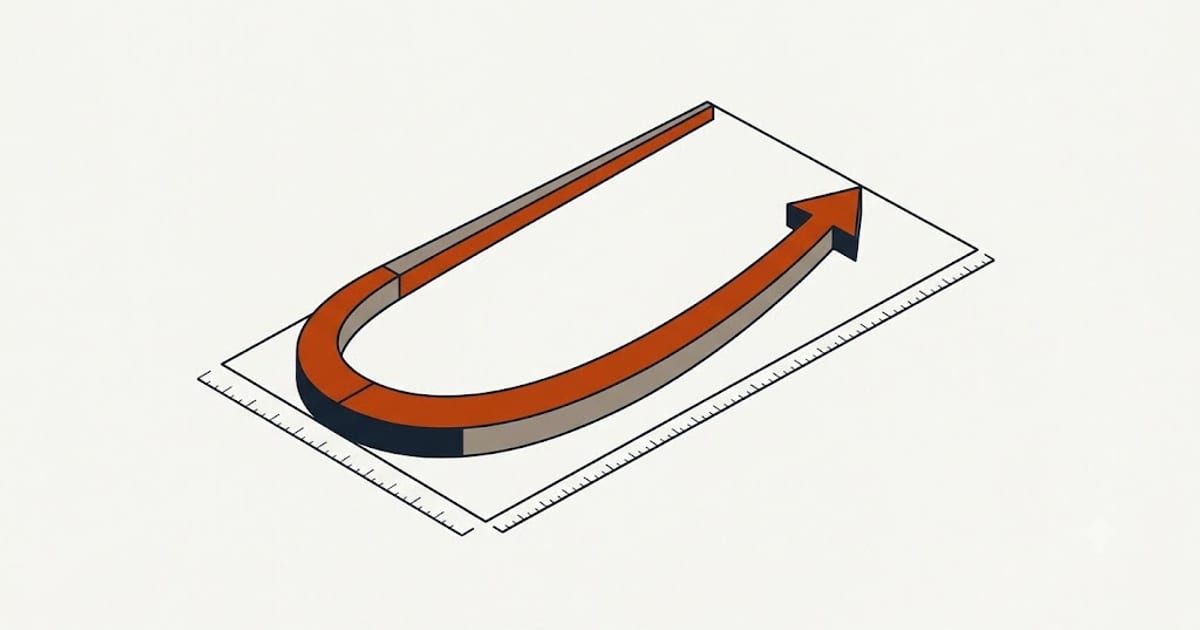
Every wet surface carries a thin film of air right against it that is at or near 100% relative humidity. That film is the boundary layer, and while it stays put, evaporation from that surface has effectively stopped — the air touching the water is already full.
An air mover's job is to strip that layer off and replace it with drier air. That is the entire mechanism, and it explains every placement rule that follows.
Shallow angle, not head-on
Aim a fan straight at a wall and the air hits, stagnates, and bounces back. Aim it along the wall at 15 to 45 degrees and it sweeps the surface, peeling the boundary layer off continuously and carrying it away.
The visible test is simple: paper taped to the far wall should flutter steadily. If it hangs still while a fan is running twelve feet away, the air is not reaching the surface — it is circulating in the middle of the room where there is nothing to dry.
Build one circle, not five arguments
Air movers set facing each other cancel out. The correct pattern is a single continuous circulation around the room perimeter, every unit pointing the same rotational direction — all clockwise or all counter-clockwise.
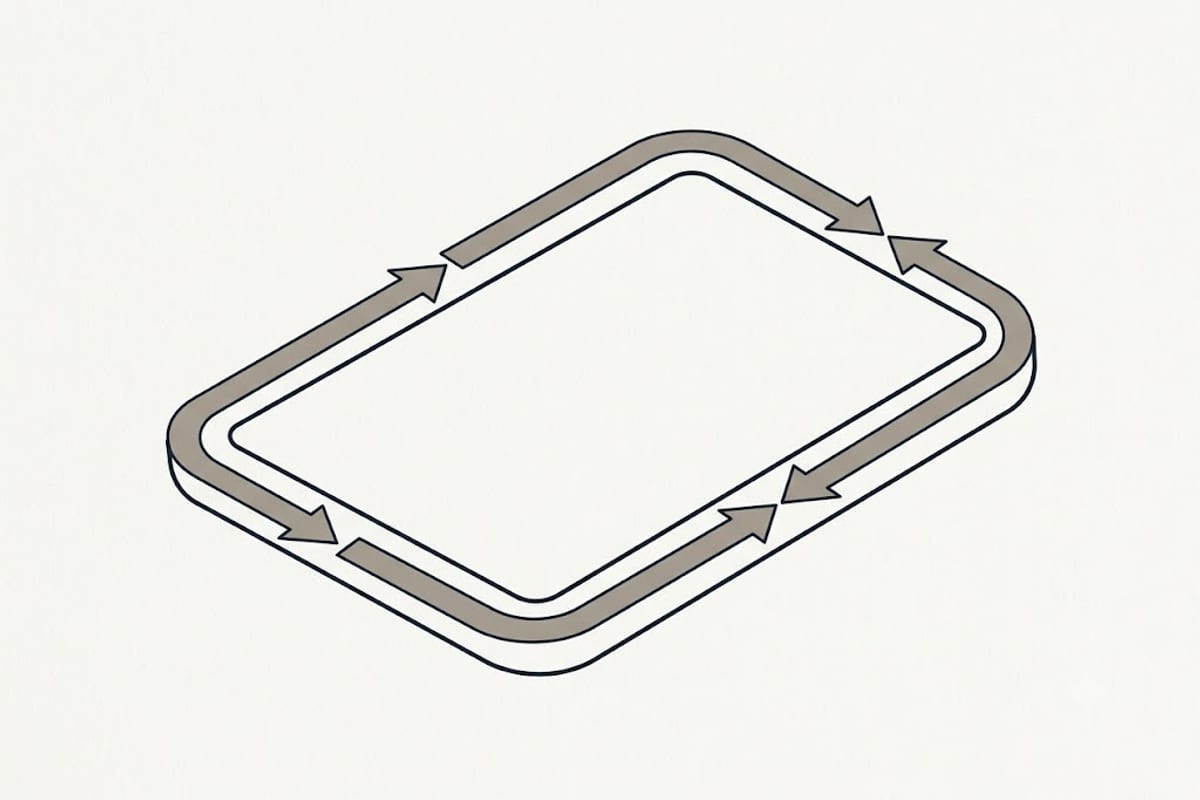
Practical spacing:
- One unit roughly every 10 to 16 linear feet of affected wall
- Each set back 12 to 24 inches from the surface, not tight against it
- Positioned in corners aiming down the next wall, so the airflow turns the corner instead of dying in it
Count comes from wet surface, not floor area
The common shortcut of one air mover per 50 to 70 square feet of wet floor is a starting point for a Class 2 loss. It underestimates badly when walls are wet, because a Class 3 loss has three or four times the surface area of the floor alone.
Add for each of these:
- Every wet wall segment beyond the perimeter count
- Each closet, which is a separate air volume and gets its own unit
- Under cabinet toe kicks, which need a dedicated low-profile unit or a hose
And subtract when a room is small enough that the units are fighting each other. In a bathroom, two well-aimed low-profile movers beat four.
The trap: airflow without capacity
Air movers do not remove any water from a building. They move it from the material into the room air. If the dehumidification cannot keep up, room humidity rises, the drying gradient shrinks, and everything slows — while the electricity bill climbs and the noise continues.
The symptom is a job where readings improved for two days and then flattened. Adding more fans at that point makes it worse. The fix is capacity, or in some conditions heat.
Temperature is the quiet variable
Evaporation rate rises steeply with temperature. Below about 70°F, drying slows sharply and refrigerant dehumidifiers lose a large fraction of their output. Above roughly 95°F, some materials begin to be at risk and equipment efficiency falls off again.
The working window is 70 to 90°F. An unheated basement in February is the classic stalled job, and the answer is usually heat rather than more airflow.
The five-minute check
Walk the room and confirm four things:
- Every unit turns the same direction around the perimeter
- Nothing is aimed head-on into a wall or into another unit
- Doors to closets and cabinets are open, with airflow reaching inside
- A thermo-hygrometer reads between 70 and 90°F with humidity trending down day over day
If all four are true and readings still are not moving, the problem is not placement — it is hidden wet material or insufficient capacity.