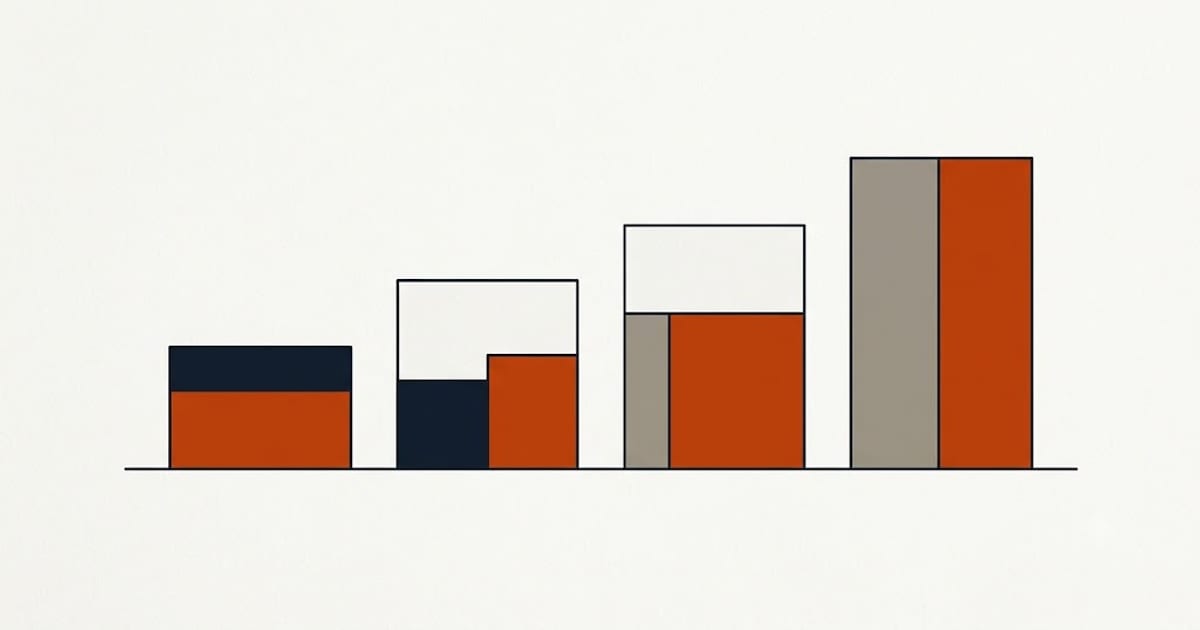
Two scales run through every water loss and they are constantly mixed up. Category is about contamination — how dirty the water is, which decides what has to be removed. Class is about evaporation load — how much water is held and how hard it is to get out, which decides what equipment goes in and for how long.
A clean supply line break into a finished basement is Category 1 and Class 3. Sewage backup onto a tile floor is Category 3 and Class 1. The two numbers move independently.
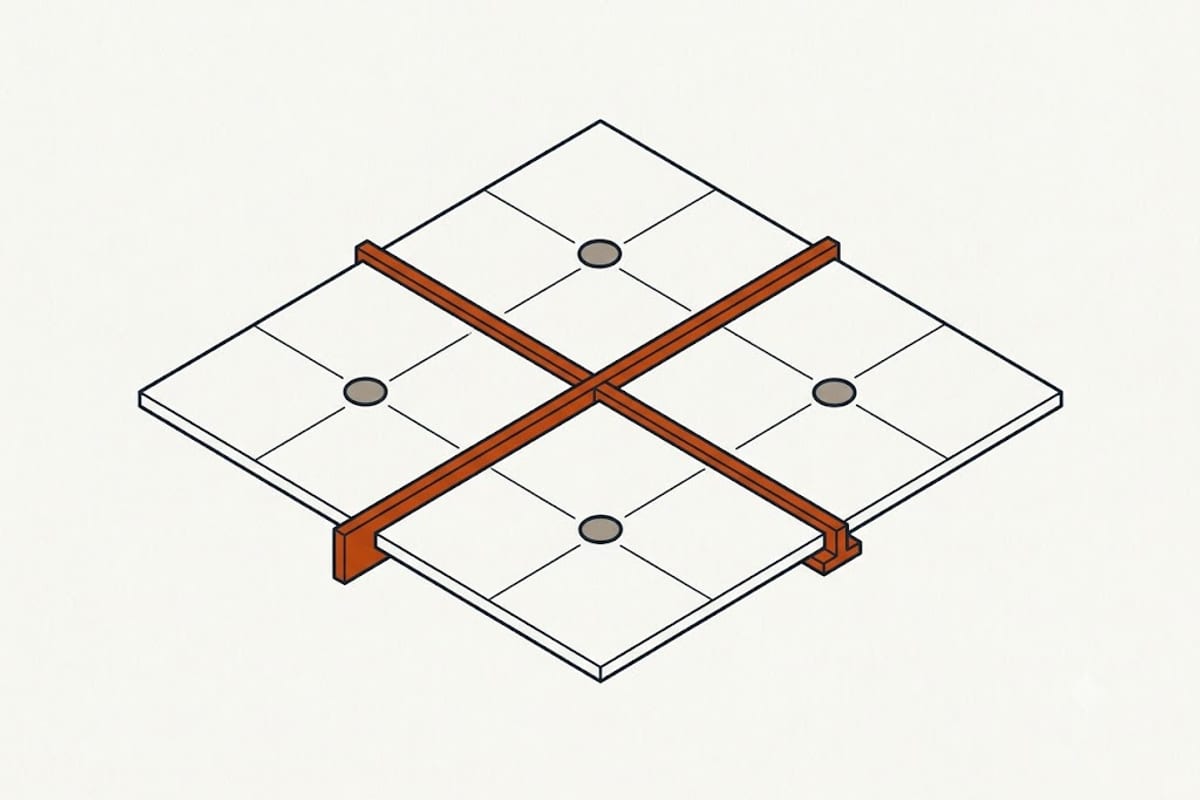
The four classes
Class 1 — least evaporation load. Under about 5% of the combined floor, wall, and ceiling area is wet, and what is wet is low-porosity: sealed concrete, tile, plywood with intact finish. A small amount of water on materials that barely absorb. Dries in one to two days with modest equipment.
Class 2 — significant load. Water has affected an entire room, carpet and pad are wet, and moisture has wicked up walls less than 24 inches. This is the common burst-supply-line loss. Three to four days is normal.
Class 3 — the greatest load from above. Water came from overhead, so ceilings, walls, insulation, and subfloor are all wet. Insulation is the problem: it holds a great deal of water, releases it slowly, and is hidden. Class 3 is where jobs get long even though everything looks simple.
Class 4 — bound water. Hardwood, plaster, lightweight concrete, masonry, stone. The water is chemically and physically bound inside dense material, and conventional airflow does very little. Class 4 needs low humidity held for extended periods, often with specialty drying — floor mat systems, injection drying into wall cavities, or heat.
Why insulation makes Class 3 expensive
A batt of wet fiberglass behaves like a sponge inside a sealed box. Airflow across the drywall face reaches almost none of it. The two honest options are to remove it, or to open the cavity and dry it directly — and removal is usually cheaper than the extra equipment days.
This is the most common place a job is underscoped. The ceiling looks dry on the surface after two days, readings on the drywall come back acceptable, and the insulation above is still wet. Two weeks later there is staining and a smell.
Why hardwood is its own problem
Wood does not just hold water, it changes shape as it moves. When the underside wets and the top face stays dry, the board swells from below and the edges lift — cupping. Dry it too fast from the top and it locks in the deformation, or splits.
Target moisture content is within 4 percentage points of the dry standard for that building, not a fixed number. Measure an unaffected area of the same species and installation, and use that as the target. In most conditioned US homes the dry standard lands between 7% and 12% depending on region and season.
A hardwood floor typically wants a mat drying system pulling through the boards from above, and often three to seven days longer than everything else in the room.
Class drives the estimate more than square footage
| Class | Equipment days, typical | Removal likely |
|---|---|---|
| 1 | 1–2 | Rarely |
| 2 | 3–4 | Pad, sometimes carpet |
| 3 | 4–6 | Insulation, ceiling drywall |
| 4 | 7–14+ | Depends on category |
Two 400-square-foot rooms can differ by a factor of five in cost purely on class. That is why an estimate given over the phone from square footage alone means very little.
Class can be reclassified — in both directions
The class recorded on day one is a judgment made from what is visible and what the meters read. Opening a wall on day two and finding wet insulation moves the job from Class 2 to Class 3. Finding that carpet pad is the only wet layer can move it down.
A reputable crew documents the readings that justify the change. If a job is reclassified upward with no new moisture readings attached to it, ask for them — reclassification is the mechanism through which an estimate grows.
What to take away
Category tells you what leaves the building. Class tells you what equipment arrives and how many days it stays. When a scope of work does not name the class, or names one that does not match what is wet, the timeline and price in that scope are not grounded in anything.