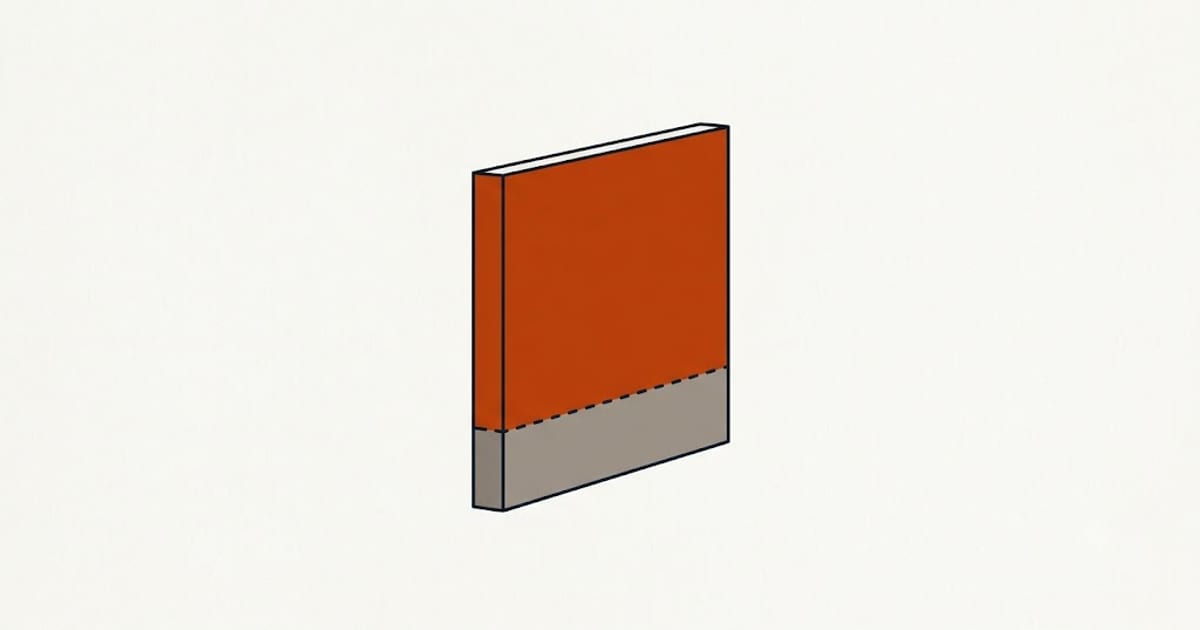
A flood cut is removing the lower band of drywall to open the wall cavity — to get at wet insulation, to let the framing dry, and to remove material that cannot be saved.
The heights everyone quotes are 2 feet and 4 feet. Those are convenient because drywall comes in 4-foot widths and a horizontal cut at either height lands on standard blocking or leaves a usable remnant. Neither is the rule.
The rule is: cut 12 to 24 inches above the highest moisture reading, wherever that falls.

Why above the wet line rather than at it
Moisture in drywall does not stop at a crisp edge. Water wicks up through the gypsum core, and the meter reads the highest point where enough moisture remains to detect. Above that point there is a transition zone that is damp but reads normal.
Cutting at the reading leaves that transition zone in the wall. Cutting a foot or two above it takes out the whole gradient and gives a clean edge to work from.
When a cut is not needed at all
Category 1 water, insulation dry or absent, and readings that respond to equipment — that wall can often be dried in place. Restoration standards favor drying over removal where the water is clean and the assembly can be reached.
Two common ways to dry a wall without a full flood cut:
- Drill holes at the base of the cavity behind where baseboard will go, and inject dry air. Invisible after trim goes back.
- Remove the baseboard only and vent the cavity from the bottom plate, using the gap that already exists.
Both preserve the wall. Both fail if the insulation is soaked, because you cannot dry saturated batts through a hole.
When the cut has to go higher
Category 3 water. Contaminated water means the affected porous material comes out regardless of whether it could be dried. The cut goes above the contamination line, and insulation in the affected cavity goes with it.
Wet insulation above 2 feet. Water from overhead soaks the batt from the top down. In that case the cut is often 4 feet or the full wall, because the water never came from the floor.
Continuous insulation or a vapor barrier. A poly vapor barrier traps water against the drywall and stops the assembly from drying in either direction. That is a full-cavity opening.
Plaster over lath. Plaster does not wick the same way and does not respond to a flood cut. It is Class 4 material and is either dried slowly with low humidity or removed entirely.
What has to happen before the wall closes
Closing a wall over wet framing is the single most consequential mistake in this work, because nothing about it is visible afterward and the failure shows up months later as odor and staining.
Before new drywall goes on:
- Framing reads within 4 points of the dry standard for the same species elsewhere in the building
- The bottom plate specifically has been checked — it sits on the slab or subfloor and dries last
- Any Category 2 or 3 exposure has been cleaned and treated
- The moisture log shows two consecutive days at target
What it should cost
A flood cut is priced by linear foot of wall and by height, and it includes the cut, removal, bagging, and disposal. Insulation removal is separate. What varies most is not the cutting but what is behind the wall — plumbing, wiring, and fire blocking all slow the work and none of it is visible when the estimate is written.
The estimate line to look at is not the cut. It is the drying days that follow it, because an open cavity dries faster and should shorten them.